Spicy or No Spicy?
Inside the vision of the man they call the Hummus Guy
July 31, 2026 | story Anna Rodenberg | photos by Riana Morales
This story is from Atrium’s Spring 2026 magazine, which released April 2026.
By 10 a.m., a line is already winding through Merrick Park’s pale stone floors and sun-washed walls. Palm leaves shift gently above the hum of conversation. Less than a dozen people stand just beyond an assembled booth about 10 feet long. For a moment, it felt as if every set of footsteps across the mall’s stone floors was heading straight toward him.
But Albert Bensadoun hasn’t finished setting up. The folding tables are half-covered in a forest green tablecloth. Containers of measured ingredients are still stacked in plastic crates, and the welcome signs aren’t in position. But it doesn’t matter. Albert, 70, moves with a rehearsed speed.
In a city often defined by Latino culture, Albert’s success in Coral Gables tells a different immigrant story, one shaped by Moroccan influence. He stands before a colorful spread of the familiar foods of his home — the pots of hummus and olive oil are the foundation of his life in Miami as he competes with a world filled with novelty and noise. He doesn’t need to reinvent the wheel; bringing his authenticity to each plate is what keeps his customers lining up every weekend.
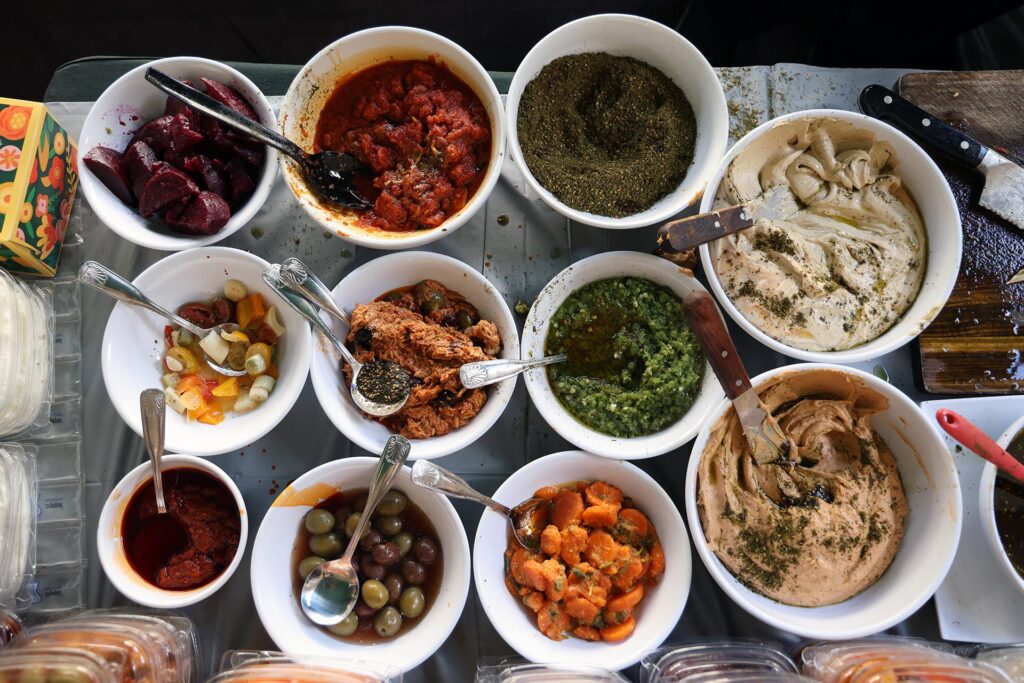
Red tomatoes are stacked in baskets, some still latched onto the vine. Loaves of bread are packed tight in the small oven underneath the table, the crusts toasting to a honey-golden shade. Above, containers of rosy beet hummus are stacked in small, plastic towers. Inside each of them, a swirl of olive oil cuts through the dense color. Fresh mozzarella sits in tubs, soft and glossy, ready to be sliced.
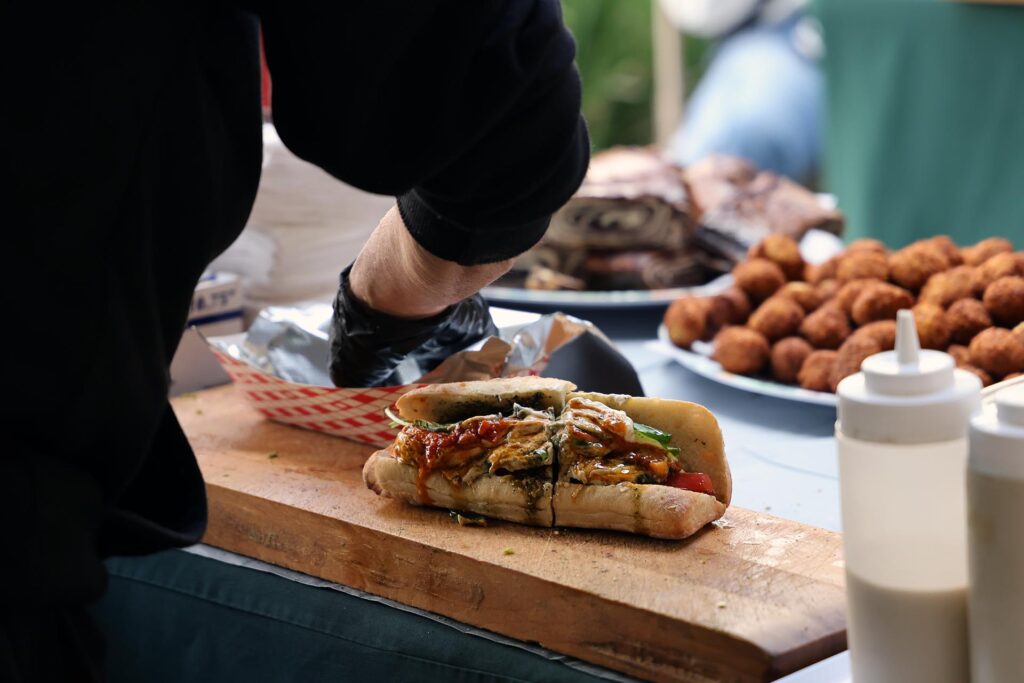
The smell of fresh bread and grated garlic mingles with the aroma of roasted vegetables. Passersby eye the collection of red, pink and ivory-white dips. Albert presses sandwiches together with practiced hands before passing them across the counter into waiting palms.
Regulars greet Albert with easy smiles and affectionate nods, voices overlapping as they pick up conversations right where they left off. A few newcomers hover at the edge of the table, unsure what to order. Albert’s voice cuts through the crowd.
“Spicy or no spicy?” Albert asks.
And before they can answer, he holds out a warm piece of bread smothered with a thick layer of hummus. He doesn’t wait for permission. He knows his product, so he approaches a potential customer, certain they’ll want a bite. He’s right nearly every time.
Albert Bensadoun has been surprising people his entire life.
Born in Kenitra, Morocco, he was raised surrounded by the flavors that define his business. Olive oil. Za’atar. Freshly baked bread. Carefully prepared sandwiches. At 11 years old, Albert moved to Montreal to reunite with relatives. There, he learned to speak seven languages fluently: Arabic, Hebrew, French, English, Spanish, Portuguese and Italian.
In 1980, Abert moved from Canada to Fort Lauderdale and launched a T-shirt business that followed the state’s ebb and flow of tourist seasons. He made all of his own designs (and claims to have invented the crop top).
Albert printed designs on the spot in front of customers, turning the act of buying a shirt into an experience. He catered to teenagers and college students, and during spring break, he made sure to set up where the crowds were thickest, catching the steady stream of tourists passing through. He was well aware that personality matters just as much as product when you’re building a business.
“All my life, I worked with young people,” Albert says. “It keeps me young.”
By 1987, he relocated to Panama City Beach to open seven T-shirt stores. When he reached his 50s in 2010, he decided to sell the business. He left the Panhandle and traveled back to South Florida with a clear intention to bring the bread and hummus business to life.
He had learned what worked and what didn’t. He knew manufacturing meant machinery, permits, staff, space — layers of costs that stacked up before a single dollar was earned. He didn’t want layers. He wanted margins.
“The best business in the world is to buy and resell,” he explains. “So I buy, and I resell. I know a bread costs me $1-$5. I sell it for five. I know that’s it. There’s no manufacturing.”
Becoming his own boss wasn’t just a financial strategy. It was temperament. He opened the hummus stand because it was familiar to him and always drew a crowd.
Now, he’s been in business for 50 years.
“I’m not afraid of opening up business,” he says. “Because I’m very consistent. Very positive.”
Consistency wasn’t glamorous. It meant showing up every day. On cold mornings, on rainy afternoons, on days when he felt more tired than motivated. He came anyway, unlocked the stand and got to work. It meant believing in a product before anyone else did. It meant looking at a space and seeing potential. He wasn’t afraid of risk because he trusted himself more than he trusted a larger system.
“Every business that I did, I was very successful,” he says, “Because I have a lot of imagination.”
So he turned to what he always knew: food. Albert, who is Jewish, noticed that kosher businesses always sold bread. So he began importing organic bread from Montreal. At first, that was all he sold.
Then came olive oil. Then za’atar for dipping.
He created a secret vinaigrette. He refined a Moroccan salad. He added hummus. Then sandwiches. His menu was set in stone, every item was rooted in the cuisine he grew up with — simple, bold and unapologetically traditional.
“I stick to what I do,” Albert says. “I don’t change … I’d rather one bird in my hand than two in the air.”
Albert bounced between locations before settling at his spot in Merrick Park.
He first started out by meeting Joe Stiles, an older grocer from New York who had opened a new market in Pembroke Pines. The older man offered Albert a vending space by the registers. Albert took it.
“Albert, I’m in the vegetable business,” he recalls Joe telling him. “I don’t want to sell no breads. I have no time … but I got two registers here. I’m brand new. Once you come just put your bread and start selling.’”
“No problem,” Albert said with a chuckle.
The first setup was simple. No banner. No polished display. Just neatly stacked loaves — olive, tomato and walnut — at two loaves for $5.
When Joe prepared to close for good, Albert met Iris Casanova, who ran a farmers’ market. He told her he sold bread, and she didn’t need much convincing. Over time, she began to notice the small things, the way he remembered details, the way he always followed through.
It wasn’t long until his booth was stationed in the parking lot of a Weston Whole Foods. He brought maybe 15 or 20 containers of hummus. Set up the table. Olive oil. Small dipping tray. Bread knife. Same system. And he sold out. And again the next day.
“Where’s your bread?” Iris asked when visiting his tent.
“I sold out,” he told her.
When she opened a market in Islamorada, he drove down every Friday with 15 or 20 boxes. He sold out every time.
Fridays were his busiest, but he made sure to leave early so he could get home before the Sabbath. Iris understood and let him pack up early.
Customers who met Albert there still remember the early days. They’d come back the next week and say, “Is the bread man there?”
And in those early market mornings — under a tent, knife in hand, olive oil glinting in the sun — he realized something simple.
“So it’s a commitment of myself towards what I do and the flavors that I sell. That’s what attracts everybody.”
He made his way to the farmers’ markets at Merrick Park in Coral Gables over 15 years ago. Business was slow at first. But Albert showed up every weekend. He talked to people. He offered samples. He knew what worked — and trusted himself.
He churned through 300 to 400 containers of hummus every Saturday and Sunday, selling out most weekends. The scale of his operation increased over the years, but his method stayed the same. He just needed more hands on deck.
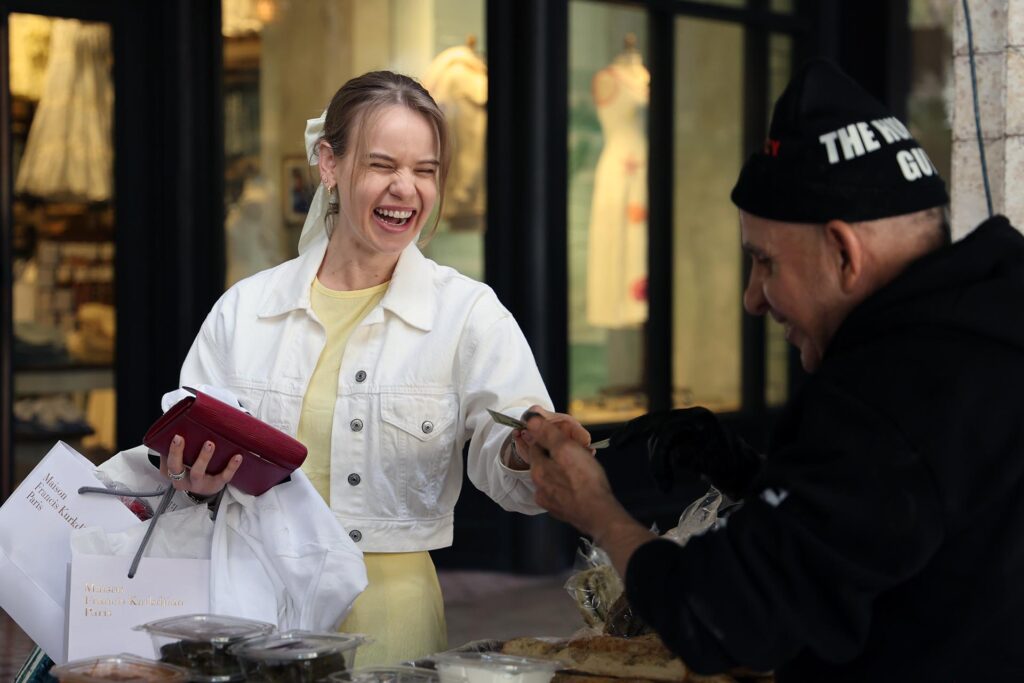
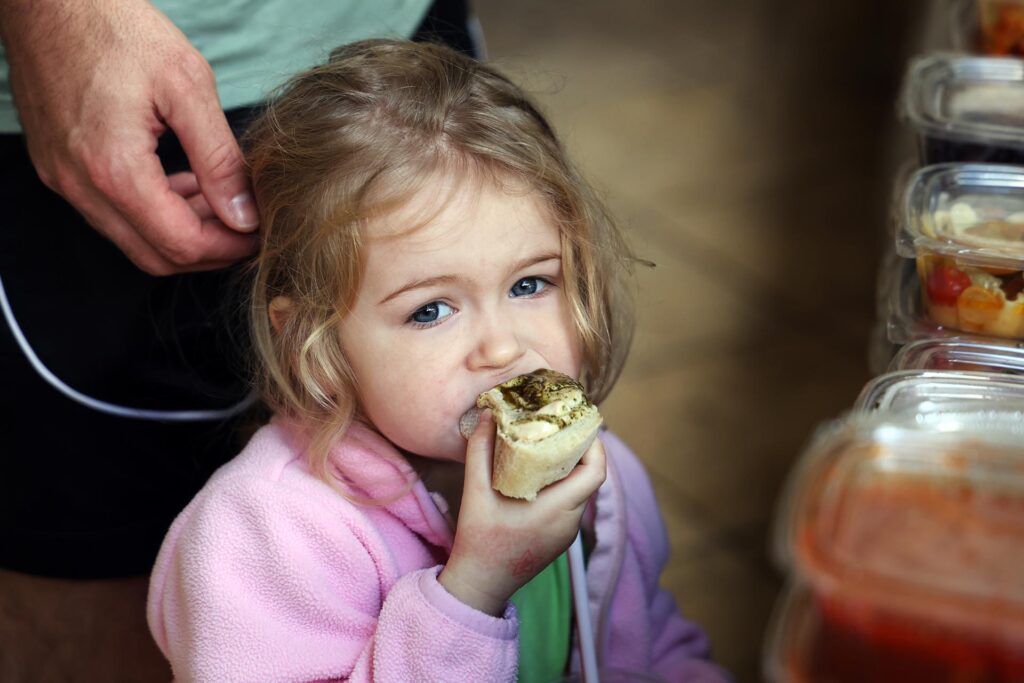
Sarah Mayer, 45, has worked with Albert for seven to eight years. She connected with him through her brother, who worked for Albert during his T-shirt venture. Her brother asked the business owner if he had any opportunities for his sister.
Albert didn’t hesitate. He offered to train her and to teach her the business from the ground up. Now, he hopes she’ll soon run a weekday market of her own.
Sarah moves seamlessly behind the counter, helping assemble sandwiches with steady hands before slipping back into the warehouse to restock supplies, returning just as quickly as she left. Now a full-time employee, she handles nearly every transaction, helps craft sandwiches, restocks produce and fills whatever gaps come up.
“Whatever is missing,” Sarah says, smiling, “I’m the other hand.”
Each week unfolds across two locations: CocoWalk in Coconut Grove and Merrick Park in Coral Gables.
In CocoWalk, his table costs him $60 to operate. He takes space in one of the many stretches of grass and patchy dirt, shaded by trees that sway in the breeze from the nearby bay. Sunlight filters through the leaves, casting soft patterns on the ground. People stroll by at an easy pace –– neighbors walking their dogs, friends catching up, families enjoying the outdoors.
At Merrick Park, his table costs him $400. The stand’s atmosphere is elevated. Small fountains murmur between polished stone walkways, and wide storefront windows are trimmed in cream and gold. The walkways are clean but bustling as shoppers bounce from designer store to store and couples dine at square tables draped in white linen. No matter the backdrop, Albert’s energy remains the same because wherever Albert and his hummus go, the crowd follows.
At Coconut Grove, the demand is relentless.
The work is long and physical. Setting up alone takes about three hours, and once the market opens, the pace doesn’t slow.
“It gets tiring because you have no breaks,” Sarah says.
When they run out of product at one location, customers are told to return the next day to the other location. Sarah, a Florida native with Egyptian parents, is drawn to the fresh air and fresh ingredients, something she knows the customers appreciate. Nothing feels processed or rushed. The mozzarella is soft and clean. The hummus is made from scratch.
She enjoys watching people experience it for the first time, and some tell her it’s the best thing they’ve tasted that week. “It’s homemade,” she says. “Today, everything is processed. We’ve lost the taste of real food.”
To keep up with the crowd he serves every weekend, making roughly $10,000 in just two days, Albert has to be meticulous. Mondays through Thursdays are spent preparing the food. Fridays are reserved for final touches. By the weekend, everything is ready.
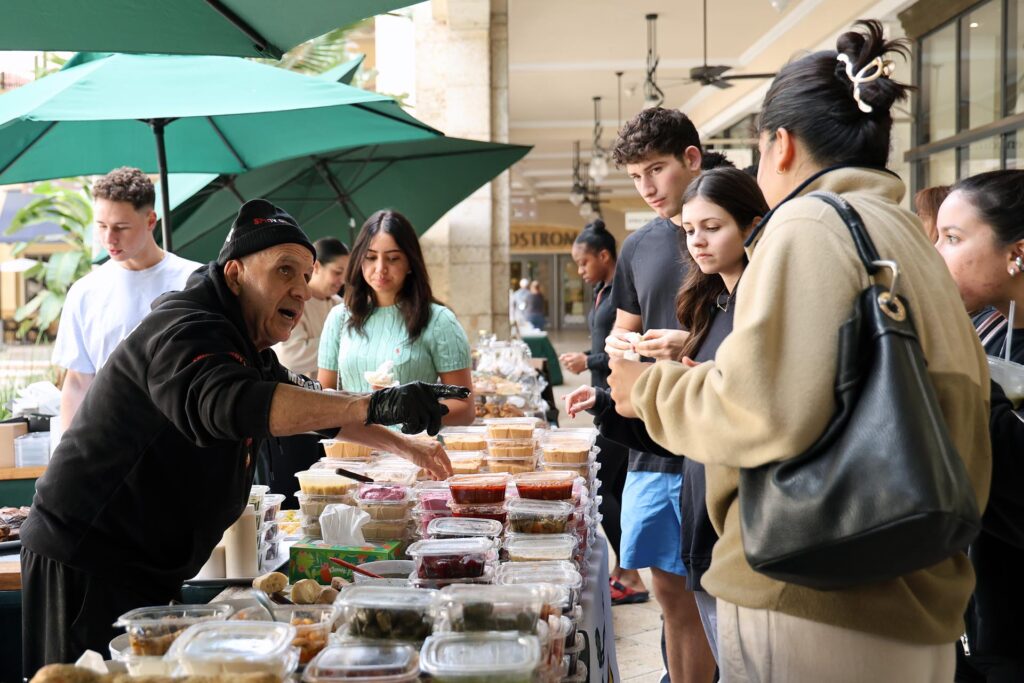
Demand for his food stems from a loyal customer base, including University of Miami students and longtime Miami residents who build their weekends around visiting his stall.
Victoria Castells, a 38-year-old Miami native, makes a beeline for Albert’s delicacies every Sunday. “I go and get the same sandwich,” she says. “It’s amazing — it’s the best sandwich I’ve ever had. When I wake up on Sunday, I look forward to getting the sandwich.”
Albert returns her smile. “You’ve been coming here for 10 years?”
Victoria nods. “Yeah. And you know exactly how I like it.”
“Of course,” he says. “You always get free falafel.”
“Really? I didn’t even notice!”
“Yep,” Albert says. “Every Sunday.”
Melissa Rodriguez, a freelance content creator, discovered Albert about five or six years ago. She still visits nearly every weekend and has watched Albert’s business evolve.
“Farmers’ markets are tough,” Melissa says. “He just seems like a very hardworking and energetic and nice guy … If you’re just walking by, he calls you over and gives you free samples … He’s kind of a businessman.”
Albert has been trying to build an audience to better his business. Students from the University of Miami began posting videos of him on TikTok — short clips capturing his energy and his signature quips. One video reached more than 20,000 views in less than a week.
Suddenly, Albert wasn’t just a local favorite. Compared to his usual traffic, he was viral.
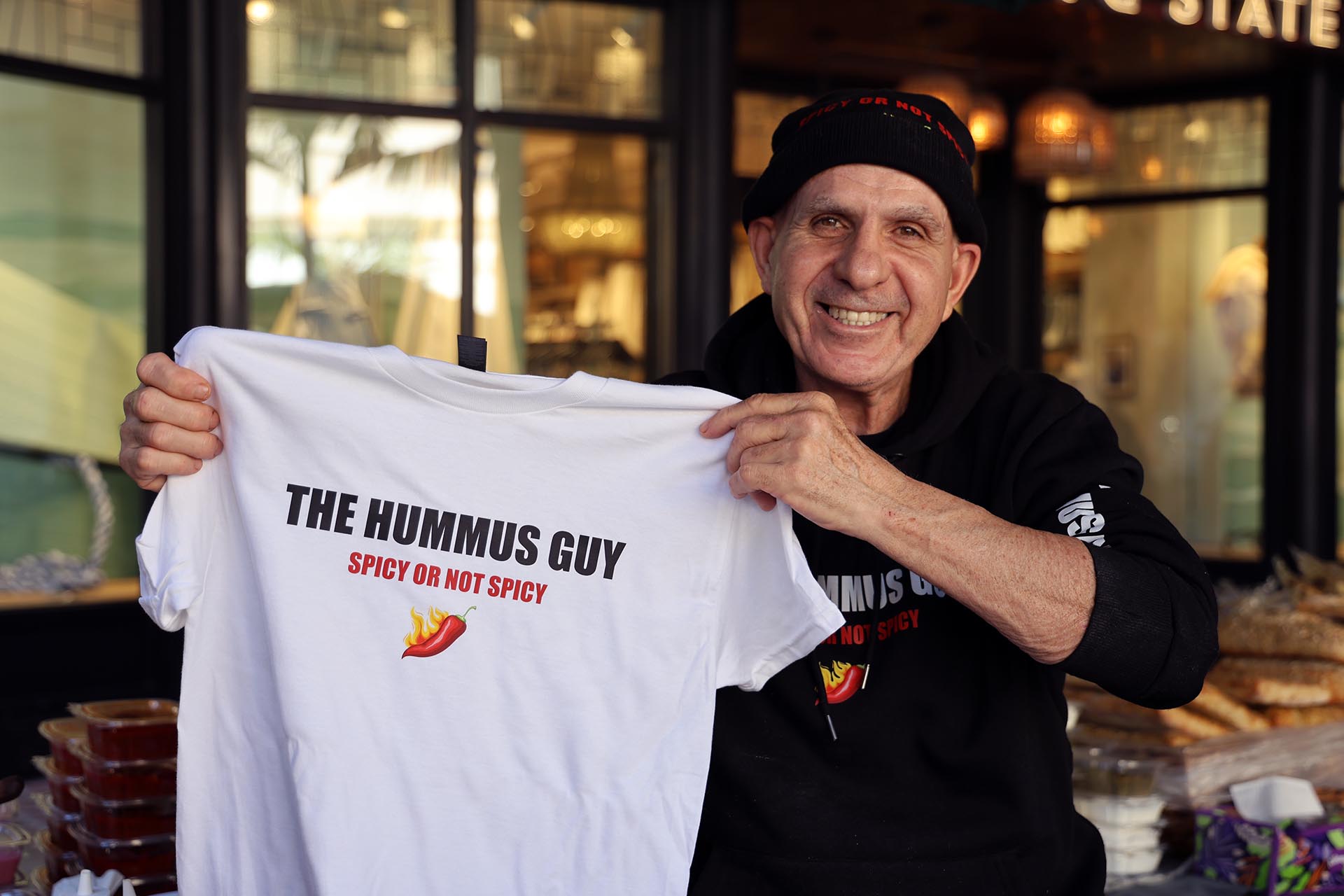
His lines grew longer. New customers arrived already knowing his name. Albert became the “Hummus Guy.” He printed T-shirts featuring his new brand, “Breadman America,” calling back to his old business.
Despite his local virality, Albert hasn’t changed. He still works every weekend, prepares everything himself and approaches customers with the same line.
“Spicy or no spicy?”
Albert still moves with purpose behind the table. When a group of college students steps up, laughing but uncertain of what to order, he doesn’t rush them. He leans forward slightly and asks where they’re from. When one mentions it’s their first time at the market, he nods and starts building something for them before they even fully decide.
He hands one of them a small piece to taste — golden hummus spread thick across the top — and waits for their reaction. When they smile, he smiles wider. He asks questions. He gives advice when it feels right. It’s never just a transaction. He’s teaching without announcing it, encouraging without preaching.
By the time they walk away, food in hand, they’re not just customers — they’re part of something he’s built. And Albert is already turning to the next young face in line, ready to do it all again.
“I love to give,” he says. “I don’t want to be cheap with people.”
At Merrick Park, his line still hasn’t stopped winding. A customer tastes the hummus, pauses, then turns back around to get more.
Albert smiles.
He already knew they would.