A Single Tether
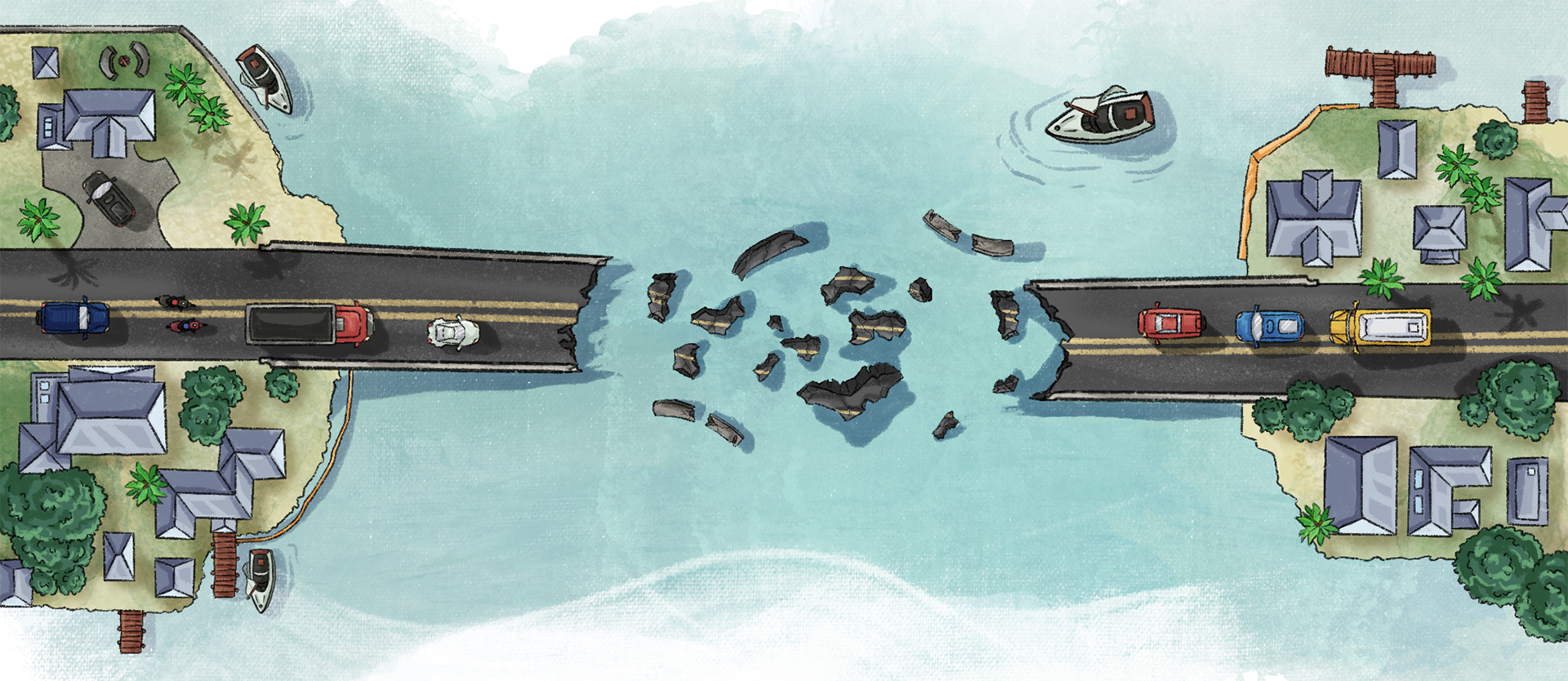
Pine Island relies on one roadway for connection to Florida’s mainland. But when that lone tether is severed, residents are left stranded.
August 14, 2026 | story Austyn Bolig
| photos by Marta Rodriguez
This story is from Atrium’s Spring 2026 magazine, which released April 2026.
A wooden plank bridge once connected Little Pine Island and Big Pine Island, stretching from one edge of land to the next. A part of the sole roadway from the island to peninsular Florida, the bridge served the community from 1927 up to its retirement in 1978. Its unburdened lumber, splintered from decades of service, was purchased by Maurie and Dan Stevens for $500.
Some of the trusses from the wooden bridge still sit on the Stevens’ property, now owned by their grandson, 49-year-old Craig Stevens.
When Hurricane Ian struck the island in 2022, it washed out Pine Island Road, the only roadway off the island. As of December 2025, it is still under construction. When natural disasters snap the tether, residents are left trapped, and everyday routines turn impossible for months at a time.
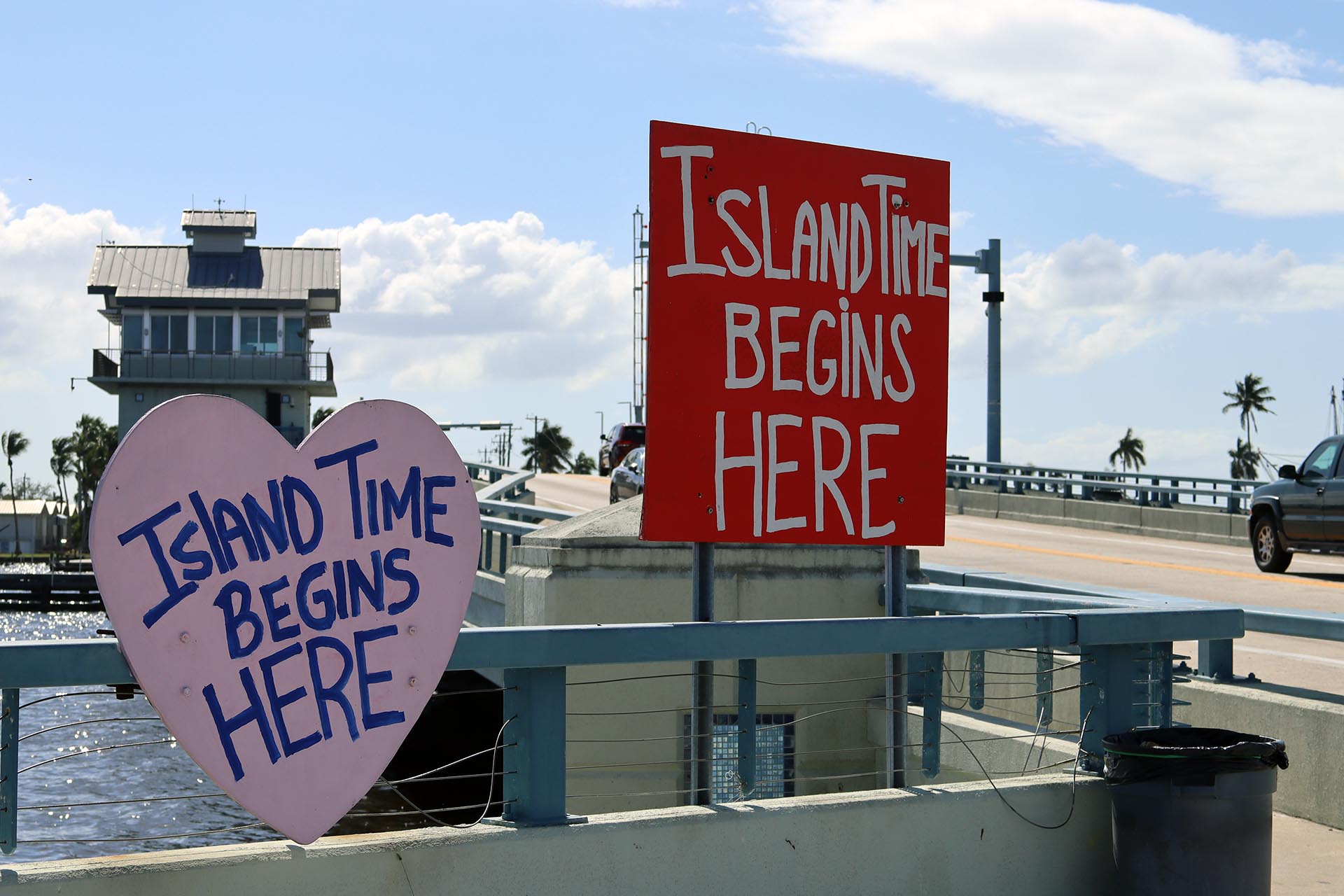
Pine Island is Florida’s largest island on the Gulf coast, spanning about four times longer than the Las Vegas strip. The road to Pine Island crosses over an open grate drawbridge in Matlacha, where car tires sing as plywood signs proclaim: This is where island time begins. It’s regarded as the “fishingest bridge in the world.”
Yet the island is still tiny compared to many of the Gulf’s booming coastal towns. There are a few grocery stores on the island. Traffic is governed by one four-way stop. There are no red lights.
Pine Island’s seclusion complicates everyday tasks. Hurricane season only makes it worse. Staci Stevens, a 45-year-old realtor, has lived on the island for almost two decades. When Hurricane Ian spun its way toward Florida, her husband, Craig, was concerned. As the storm approached, he turned to his wife.
“I have this feeling about this one,” Craig said.
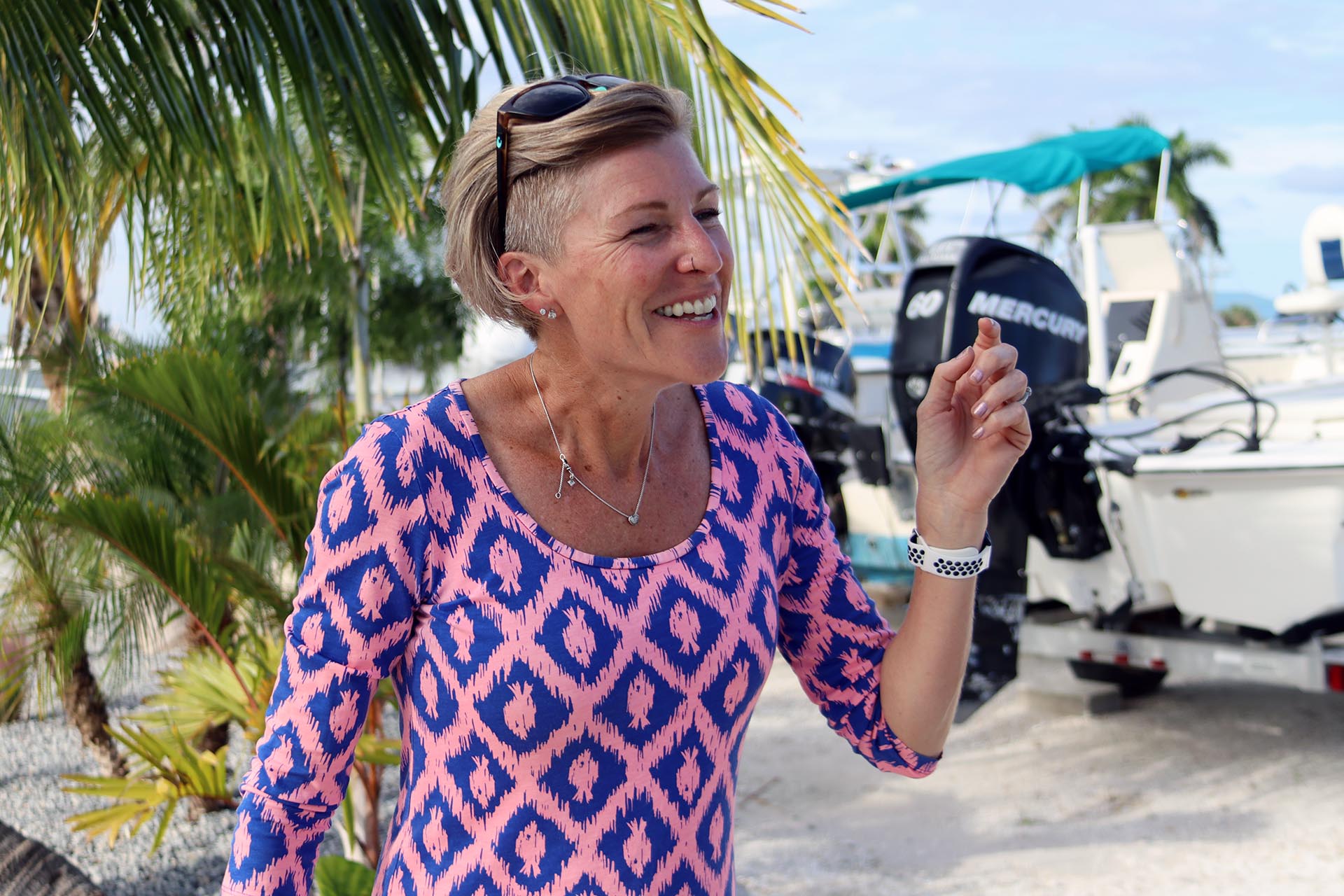
On Sept. 26, 2022, Hurricane Ian churned in the Gulf, and the Stevens and their neighbors prepared for the worst. On the 27th, Lee County issued a mandatory evacuation order. The Stevens weren’t going to leave. Instead, they cracked open their box of camping gear and dug out battery-powered lights for their four children. Staci stocked up on nonperishables in the summer, buying canned goods she usually doesn’t let the kids eat. The family filled up gas tanks in case the roof blew off the island’s Circle K again.
On the morning of Sept. 28, Staci took a work call on her iPad, her internet connection already unreliable as the storm inched closer. She left her colleagues with a warning and told them they might not hear from her for a week or two.
She let the dogs out into the yard around 11 a.m. Rain pelted the grass as Hurricane Ian arrived.
Staci’s home sat on a small hill on the family’s palm tree farm. Water cascaded down her pasture in a familiar pattern, inundating banana and palm trees with salty water. Their home was over a mile inland in every direction, but the water surrounded it in waves, swallowing their driveway as it lapped at fenceposts.
“There’s no way that’s water from the bay,” she murmured.
Craig knew the pattern like the back of his hand, but it was never this close. “It’s 100% from the bay,” he said.
The water receded before it reached the palms near their front porch, easing the family’s fears. When the Stevens woke up the next morning, Pine Island’s streets had become highways for side-by-sides, all-terrain vehicles with two rows of seats and a roof, well-suited to drive over uneven terrain and washed-out roads. The drivers on the side-by-sides carried news. “The bridge is down,” they warned.
Even with an influx of supplies, such as clean water and energy bars, the Stevens struggled to decide what to do with Craig’s parents. With no road off the island, there was no reliable access to emergency services. Craig’s parents, along with other vulnerable residents, were evacuated to the mainland. Some left by boat, while others were airlifted.
Residents took a bus from the Stevens’ marina to the airfield. As they waited in the shade of the marina’s porch, they grew restless with no electricity or reliable cell signal, rattling off the same few questions.
“When can I leave?”
“I don’t know. When the bus gets here.” Staci responded.
“When’s that going to be?”
“I don’t know.”
“I need to call my son or my daughter.”
“You can try,” Staci lamented. “But I can’t guarantee that you’ll get a hold of anybody.”
“Where am I going?”
“I don’t really know,” Staci said.
Staci’s younger children, Fin, 13, and Marina, 9, helped sort supplies as more resources arrived by boat. They snuck oatmeal cream pies with neighborhood kids during a day’s work. Organizations like World Central Kitchen handed out hot meals daily, often pulled pork, for almost six months.
A temporary bridge was installed a week and a half after the storm. But it wasn’t a permanent solution. Coastal bridges are difficult to navigate, especially when they’re temporary.
When understanding how bridges withstand hurricanes, Jennifer Bridge, an aptly named civil and coastal engineering professor at the University of Florida, always asks, “Is it a one in 700-year storm or is it a one in 1,500-year storm?” Risk assessment is crucial in designing bridges, but the stronger the structure, the more expensive it becomes.
For islands like Pine Island, the cost of building a new bridge for a one-in-10,000-year storm may not be worth it, even as engineers consider building codes and coastal phenomena like salt in the air, or scour, when water erodes sand around an object.
“Were the bridges under-designed?” Jennifer asked. “Not necessarily.”
Bridges are designed to withstand certain loads, Jennifer said. When the structure is tested to its limit, engineers deem it a design-level event, like Hurricane Ian. And with such an event, there can be issues.
By July 2024, the island’s severed tether remained a problem. Construction of a new bridge in Matlacha reduced traffic to a single lane shared by both directions. Residents were told the reduction would only last four months. It lasted nearly a year.
The bottleneck exacerbated the island’s seclusion. Cars took two hours to cross the bridge. Nothing wider than 12 feet could traverse the roadway, so residents who tried to replace their mobile homes couldn’t receive them.
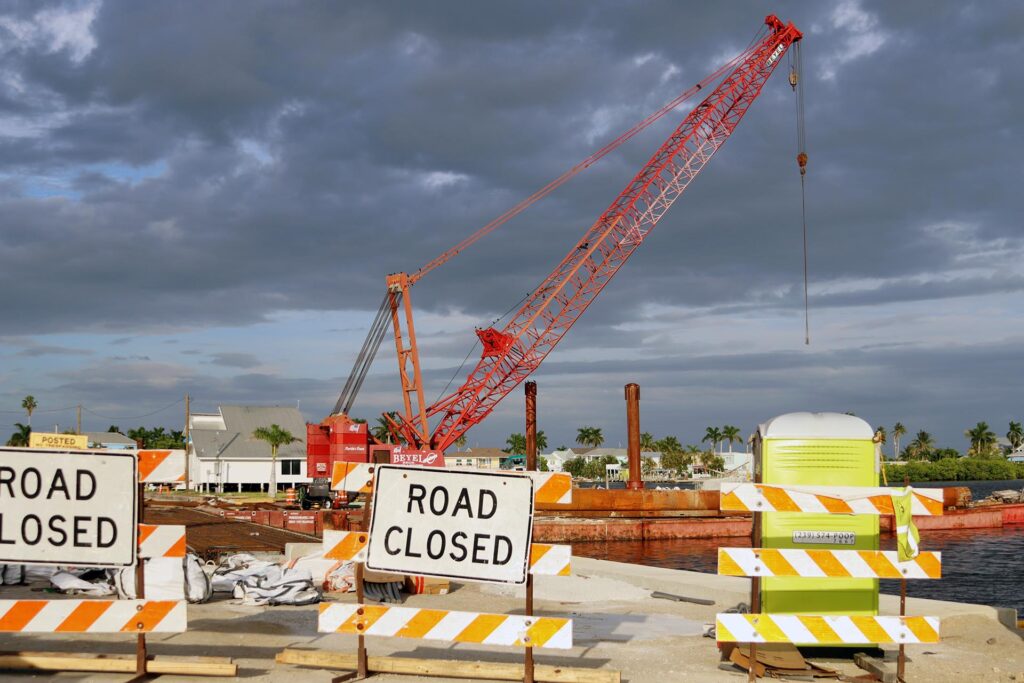
The bridge opened up to two lanes in April 2025. The construction on Pine Island’s new multimillion-dollar bridge is ongoing, but the Florida Department of Transportation told residents the new bridge will be able to withstand “storm surges from a Hurricane Ian-level event.”
Even severed from the mainland, the Stevens fared relatively well after Ian. Other residents couldn’t say the same. Harold Haskins, 79, and his wife, Agnes, 74, moved into a double-wide on a canal in Pine Island Cove, a 55-and-over mobile home park, after moving from up north 21 years ago.
While the island has no beaches, it has waterfront properties, like the lot Harold lives on. When he bought the house, his neighbors said the water hadn’t reached their home in over 50 years.
Before the storm, Harold called the Holiday Inn in Cape Coral to book a room. The couple scrambled, gathering up paperwork and jewelry before they hit the road.
The bridge’s deterioration meant Harold and Agnes couldn’t return home for 10 days, he said. In the meantime, three feet of water had seeped into their home, soaking everything inside. The storm had peeled the roof off like a tin can. In the days they waited to return, mold had festered in the home Harold once loved. Defeated, the Haskins returned to a friend’s home in Cape Coral, where they lived for a few weeks.
Eager for a home, the couple searched for a new mobile home and were told they’d have to wait a year. They opted to rebuild their trailer instead, renting a mobile home on the mainland for $2,000 a month while remodeling. Thirteen months and $200,000 later, his trailer in Pine Island Cove was livable.
He remembers the kindness of the community that helped him while he worked on his house. People stopped by with sandwiches, water and Gatorade.
“I was surprised, really, at how many people were trying to help us,” Harold said.
The storm’s woes persisted after his home was repaired. With traffic backed up from Matlacha to Burnt Store Road, a distance of over two miles, Harold sat in his car with nothing to do but swear as he waited to cross the only single-lane bridge that could take him home. Sometimes, he’d wait up to an hour.
Some residents were fortunate to return to the island before the bridge was resurrected.
Larry Jinks, 58, took all the normal precautions leading up to the hurricane, but sandbags weren’t enough to keep the church he pastored from being flooded.
Larry moved to Pine Island 15 years ago to become the pastor at First Baptist Church of St. James City. He has his modus operandi for hurricane season — stacking sandbags and moving furniture inside to batten down the hatches.
“We’ll do what we can, and we’ll come back in a day or two and resume life,” he remembered thinking.
Larry and his wife, Gina, didn’t expect to evacuate until the forecast shifted with Pine Island in Ian’s sights, so they decided to stay in Fort Myers with a friend.
Larry rushed back to the island after the storm, preparing the church as a center for aid while Gina stayed on the mainland. Larry couldn’t cross either bridge, so a fisherman took him across the water.
The fisherman navigated as Larry sat on an ice chest, wind striking his face as the motor hummed. He faced forward, collapsed buildings and washed-away roads passing in his periphery.
“This can’t be real,” Larry thought.
The boat docked at what was left of the Yucatan Waterfront Bar & Grill on the island. As Larry disembarked, he watched people mill about, unsure what to make of the chaos as they exchanged bewildered expressions.
Ian had not spared the First Baptist Church of St. James City. A $1 million yacht rested in the middle of the street. The church’s windows were shattered. The cars in the parking lot had taken on three feet of water, and the building had flooded. Most of the picnic tables under the church’s pavilion were washed away.
The building’s tile floors survived, unlike its drywall or outlets. Storm surge had tousled rows of pews and soaked the piano.
Four streets south of the church’s destruction, Larry’s home shared a similar fate. It was inundated by five feet of water. As he took it all in, Larry’s new reality felt nightmarish.
He held a service in the parking lot the next day, amid the rubble. Around a dozen residents prayed together and sang the hymn, “Because He Lives,” as an American flag flapped in the breeze.
With his home, church and vehicles all flooded, Larry had nowhere to sleep. A local pastor friend lent him a car to sleep in for a few nights.
The sanctuary was clean enough to be used as storage for incoming supplies a week and a half after the storm. Bottles of water were mounded up in a corner next to diapers and hygiene items. By early October, Lee County and FEMA parked trailers at the church with laundry machines, bathrooms and showers for the community.
“We got everything that we needed, when we needed it,” Larry said.
Thanks to videos Larry and his wife posted to Facebook, people from as far as Canada and Arizona slept on cots in the church’s social hall to help Larry rebuild. For the next four to five months, the church met outside under a pavilion, only missing a few Sunday services when the site was used to hand out aid.
Five feet of water burst into Larry’s home on the island, so he raised it seven feet. He hopes to do the same for the church. It’s estimated to cost $700,000 to raise the building, and a campaign Larry began in February 2025 has raised over half of that.
Three years after the hurricane, life on Pine Island has found a new normal. New faces mill around town, Staci Stevens’ kids still won’t eat pulled pork, some residents still live out of RVs and much of the island’s mangroves are missing leaves.
Fin Stevens’ biggest problem is the same as most other 13-year-olds.
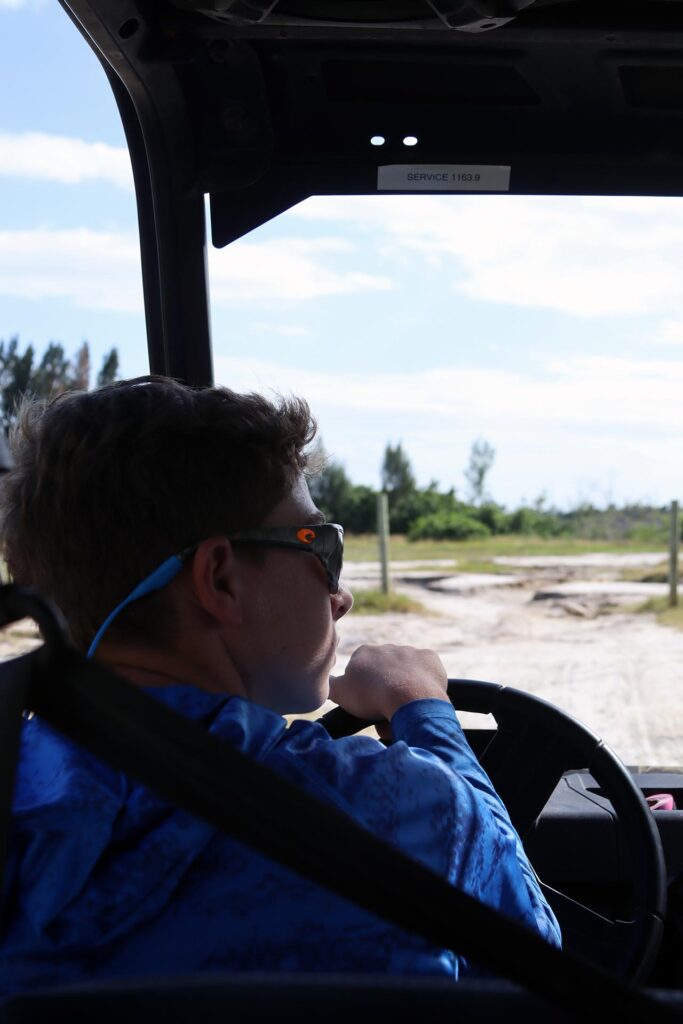
As he drove a side-by-side down a dirt road, Fin peered at his mom through his camouflage Costa sunglasses. “Do I have to go to school tomorrow?” he asked.
“Yes,” Staci answered immediately.